

Machine Monitoring for Energy & Industrial Manufacturing: The Guide to Capacity, Uptime, & Project Control
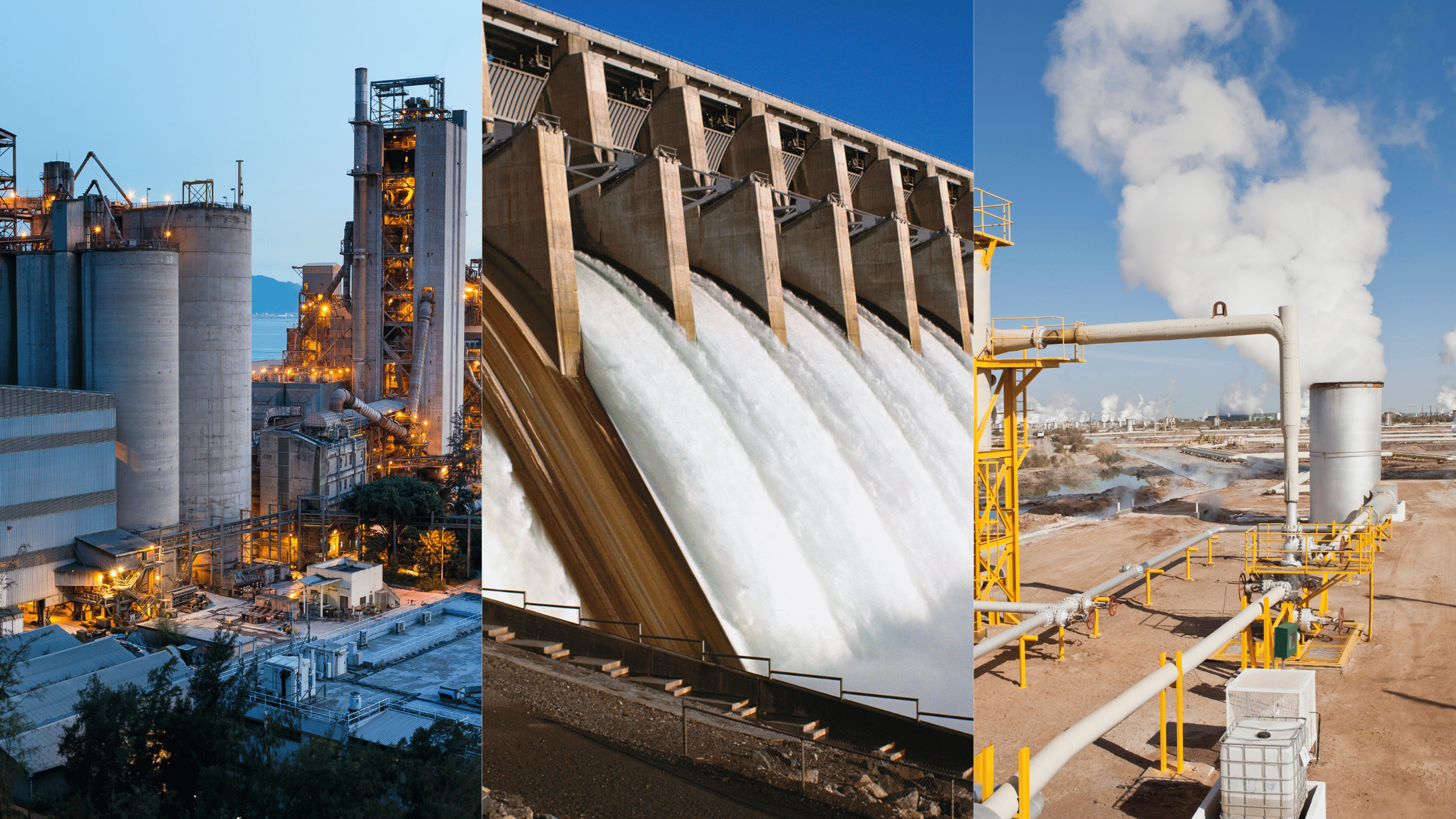
Energy and industrial equipment manufacturing often combines heavy fabrication, large format machining, welding, thermal processing, coating, assembly, and testing in long production routes. A delay on one constrained asset can affect a high value component, project margin, and a customer delivery date at the same time.
Energy and industrials manufacturing machine monitoring gives operations, maintenance, quality, and project teams current visibility into equipment activity and selected process conditions. It can show when a machine, cell, furnace, line, or test resource is running, idle, stopped, or operating outside its established baseline.
This guide explains what manufacturers should monitor, how production data supports code and quality systems, where monitoring creates financial value, and how to implement it across complex, mixed equipment facilities.
What is energy and industrials manufacturing machine monitoring?
Energy and industrials manufacturing machine monitoring is the continuous collection and organization of equipment, process, and production data from the machines used to produce energy systems, pressure equipment, pumps, valves, turbines, compressors, electrical equipment, heavy machinery, and industrial components.
A monitoring system may collect machine status, run time, spindle activity, cycle time, throughput, downtime, utilization, vibration, temperature, current, power, pressure, force, flow, and other available signals. The exact data depends on the equipment, sensors, controller access, and deployment configuration.
Current information helps teams respond while production is active. Historical information helps them compare jobs, projects, machines, shifts, and process windows. Together, those views help identify recurring losses and verify whether corrective action improved performance.
Production monitoring supports operational and quality decisions. It does not replace engineering design, code calculations, approved welding procedures, qualified personnel, inspection, testing, or product certification.
Why monitoring matters in heavy industrial production
Work in process accumulates value
Large industrial components may contain significant material, machining, fabrication, heat treatment, inspection, and labor cost before reaching final assembly. A problem discovered late in the route can create substantial scrap, rework, schedule, and recovery expense.
Earlier visibility into equipment or process changes can help limit the amount of production exposed to a developing issue and give qualified teams more context for investigation.
Constrained assets govern project schedules
Large boring mills, vertical turning lathes, weld cells, furnaces, blast and paint systems, balance equipment, hydrostatic test stations, and coordinate measuring machines often serve many projects. An interruption can affect multiple delivery dates.
Monitoring shows how scheduled time is divided among production, setup, waiting, testing, maintenance, and unplanned downtime. That distinction supports more accurate capacity planning and capital decisions.
Low volume work still creates large financial exposure
Many industrial products are engineered to order or produced in small quantities. Traditional high volume metrics may provide limited insight when every project follows a different route.
Machine monitoring can still compare actual and planned production time, identify waiting and downtime, and show how constrained resources are used across jobs. Project, operation, and asset context make the data more useful.
Equipment reliability protects delivery and margin
Breakdowns on large or specialized equipment can require long lead parts, outside service, crane access, and schedule recovery. Condition and downtime history helps maintenance teams prioritize work based on equipment behavior, criticality, and project effect.
What energy and industrial manufacturers should monitor
The monitoring plan should begin with a production or financial question. Common examples include:
- Which constrained asset is delaying active projects?
- How much scheduled time is spent producing, setting up, waiting, or stopped?
- Which equipment conditions changed before a breakdown or quality issue?
- Are actual operation times matching estimates and routings?
- Where are inspection, heat treatment, coating, or testing queues forming?
- Can existing capacity support the quoted backlog?
Machine state and utilization
Run, idle, stopped, setup, fault, and maintenance states show how available time is used. Utilization should be reviewed with job and reason context because waiting for drawings, material, tooling, inspection, crane access, or an upstream operation can appear as machine idle time.
Cycle and operation time
Actual operation time can be compared with the estimate, routing, or established baseline. Repeated variance may point to tooling, programming, material, setup, handling, process, or planning conditions that affect project margin.
Downtime and delay reasons
Capture the start, duration, asset, job, and reason for each production loss. This helps distinguish equipment breakdown from waiting, quality review, engineering questions, material shortages, and resource conflicts.
The SensFlo machine downtime guide explains how to measure, prioritize, and correct recurring production losses.
Equipment condition
Vibration, temperature, motor current, power, pressure, and other signals can show changes in bearings, spindles, gearboxes, pumps, fans, motors, hydraulic systems, and supporting utilities. Trends help maintenance teams prioritize inspection and planned work.
Selected process conditions
Temperature, pressure, vacuum, current, voltage, force, torque, flow, humidity, and time may be relevant to welding, heat treatment, coating, forming, assembly, and testing. The approved specification, procedure, code, measurement system, and quality plan determine which values are controlled and how product acceptance is established.
Energy and industrial equipment that can be monitored
Large format CNC machining
Horizontal and vertical boring mills, large lathes, machining centers, grinders, and other precision equipment may be monitored for machine state, spindle activity, cycle time, load, vibration, temperature, tool related events, coolant systems, and downtime.
The SensFlo metalworking monitoring page provides additional detail on CNC utilization, tooling, coolant, production time, and machine condition.
Cutting, forming, and fabrication equipment
Laser, plasma, waterjet, saw, press brake, rolling, stamping, and forming equipment may be monitored for machine activity, cycle counts, operation time, force or current where available, material waiting, changeovers, and downtime.
Welding and joining
Manual, robotic, submerged arc, resistance, and specialized welding systems may provide equipment status, cycle time, current, voltage, wire feed, gas flow, cooling, and downtime data. Monitoring can support production visibility and investigation.
Weld acceptance remains governed by the applicable code, approved welding procedure, qualified personnel, inspection, testing, and customer requirements.
Heat treatment and furnaces
Furnace status, cycle duration, temperature, pressure, vacuum, atmosphere, gas flow, quench equipment, and supporting utilities may be relevant. Monitoring can help operations and maintenance teams identify interruptions or developing equipment problems.
Formal heat treatment records must use instruments, calibration, sampling, data integrity, and controls suitable for the applicable procedure and code.
Surface preparation and coating
Blast, paint, powder coating, plating, and curing operations may monitor equipment state, cycle time, temperature, humidity, pressure, flow, filtration, and ventilation. The appropriate measurements depend on the coating system and approved process.
Assembly and functional testing
Assembly stations, torque systems, balancing equipment, hydrostatic test stands, electrical test equipment, and end of line systems may be monitored for equipment availability, cycle duration, queue time, faults, and selected process values.
Testing availability can become the final constraint on shipment when completed products wait for an approved test resource.
Production utilities
Compressed air, chilled water, cooling towers, pumps, dust collection, ventilation, and power systems often support multiple production areas. Monitoring condition and interruptions can provide earlier warning of plantwide constraints.
How monitoring supports ASME code manufacturing
Manufacturers of boilers, pressure vessels, and related equipment may work under the ASME Boiler and Pressure Vessel Certification program. ASME certification evaluates a manufacturer or assembler quality control system against applicable Boiler and Pressure Vessel Code sections.
Production monitoring may provide objective equipment and process data for maintenance, production history, delay analysis, and investigation. The certified organization remains responsible for its quality control system, materials, design, fabrication, welding, heat treatment, examination, testing, records, authorized inspection, and code requirements.
How monitoring supports API Q1 quality systems
API Specification Q1 provides quality management system requirements for organizations supplying products to the petroleum and natural gas industry. Applicability depends on the organization, products, customer contracts, licensing, and certification scope.
Monitoring data can support quality management activities such as equipment performance review, process control, maintenance, risk review, investigation, corrective action, delivery performance, and continual improvement. It does not provide API certification or establish product conformity on its own.
The financial value of industrial equipment monitoring
The business case combines protected project revenue with lower cost and better use of capital equipment. Estimates should use actual backlog, machine rates, contribution margin, downtime, project schedules, scrap, rework, labor, and maintenance history.
Protect delivery on high value projects
Earlier visibility into constrained assets helps teams respond before a delay spreads through fabrication, machining, coating, assembly, and testing. More reliable production protects milestone and shipment dates.
Improve job costing and quoting
Actual operation, setup, idle, and downtime data provides a stronger basis for project review and future estimates. Teams can identify where planned hours differ from the production time actually required.
Reduce scrap and rework exposure
Earlier investigation can limit the material, labor, outside processing, and schedule cost attached to a developing equipment or process issue.
Defer unnecessary capital expense
Utilization and delay data helps leaders determine whether a new asset is needed or whether capacity can be recovered from setup, waiting, scheduling, maintenance, and downtime losses.
Estimate the opportunity
The SensFlo ROAI Calculator helps manufacturers estimate the revenue and cost effect of recovered productive time. Validate the estimate with actual demand, backlog, contribution margin, project constraints, and post implementation results.
How FloControl supports energy and industrial equipment manufacturing
FloControl machine monitoring software organizes equipment signals into production information such as run time, idle time, cycle time, throughput, downtime, utilization, and shift performance. SensFlo can support legacy and modern equipment, with available data determined by the deployment configuration.
Teams can use FloControl to answer questions such as:
- Which constrained assets are affecting active projects?
- How much scheduled time is spent producing or waiting?
- Which downtime causes create the greatest project effect?
- Are operation times matching estimates?
- Which equipment condition changes require maintenance review?
- Can current capacity support the production backlog?
Facilities can review SensFlo pricing to compare monitoring, workflow, analytics, reporting, and integration capabilities.
How to implement monitoring in an industrial equipment facility
1. Select the primary project constraint
Start with the machine, process, test resource, or utility that has the greatest effect on delivery, project margin, rework, or capital planning.
2. Define the decisions the data must support
Agree on the questions that operations, maintenance, quality, engineering, and project teams need to answer. Select the smallest useful set of signals and reports.
3. Connect equipment data with job context
Organize results by job, project, operation, asset, shift, or product family where appropriate. This makes actual versus planned time more useful.
4. Align with code and quality controls
Determine whether monitoring data is operational information, supporting evidence, or a controlled quality record. Involve engineering, quality, inspection, and regulatory personnel when the data will support code work or product acceptance.
5. Establish a baseline
Measure normal run time, setup, waiting, downtime, operation duration, utilization, and selected equipment condition data before setting targets.
6. Create response workflows
Define who receives alerts, what they should verify, when production or quality should be contained, and how the response is documented.
7. Verify results and expand
Compare baseline and post implementation performance. Track recovered production time, schedule performance, project hours, maintenance response, rework, reporting labor, and verified savings. Expand after the first use case has a clear owner and measurable result.
Build industrial monitoring around project delivery and margin
Energy and industrials machine monitoring is most useful when it connects equipment activity with the projects, processes, and decisions that determine delivery and financial performance.
Start with a constrained asset, define the data and ownership clearly, and measure the business effect. This gives operations, maintenance, quality, and project teams a shared production record while helping the organization protect capacity, cost, and customer commitments.
Contact SensFlo to review your equipment, project constraints, data requirements, and expected return.
Frequently Asked Questions
What is energy and industrials manufacturing machine monitoring?
It is the continuous collection and organization of equipment, process, and production data from machines used to produce energy systems, pressure equipment, pumps, valves, turbines, compressors, electrical equipment, heavy machinery, and industrial components.
What equipment can SensFlo monitor in an industrial equipment plant?
SensFlo can monitor large CNC machines, cutting and forming equipment, weld systems, furnaces, coating equipment, assembly stations, test stands, pumps, compressors, and supporting utilities. Available data depends on the machine and deployment configuration.
How does monitoring support engineered to order manufacturing?
Monitoring can connect run time, setup, waiting, downtime, and operation duration with the relevant job, project, asset, or routing. Teams can compare actual production time with estimates and identify constrained resources affecting the backlog.
Can machine monitoring support ASME code manufacturing?
Monitoring can provide equipment and production data for maintenance, production history, delay analysis, and investigation. ASME code conformity depends on the certified quality control system, engineering, materials, fabrication, welding, examination, testing, inspection, and records.
Can monitoring support API Q1?
Monitoring data may support equipment performance review, process control, maintenance, risk review, corrective action, delivery performance, and continual improvement. API certification and product conformity depend on the organization’s approved quality management system and applicable requirements.
How does monitoring reduce downtime on large industrial equipment?
Monitoring records equipment state, event duration, recurring losses, and selected condition signals. Teams can respond sooner, prioritize high impact assets, and schedule maintenance with better production context. Read the SensFlo downtime reduction guide for the full framework.
Can monitoring help improve job costing?
Yes. Actual run time, setup, waiting, and downtime data creates a stronger operating record for comparing estimates with completed work. The organization still determines how production data is connected to job costing and financial systems.
How is the ROI of industrial equipment monitoring calculated?
Return may include protected project revenue, recovered productive time, lower scrap and rework, reduced maintenance expense, improved quoting, less reporting labor, and deferred capital spending. Use the SensFlo ROAI Calculator for an initial estimate and validate it with facility data.



Talk to us
Let us take your company to the next level. Let’s have a chat and find out how we can help you.

