

Machine Monitoring for Aerospace & Defense Manufacturing: The Guide to Capacity, Quality, & Compliance
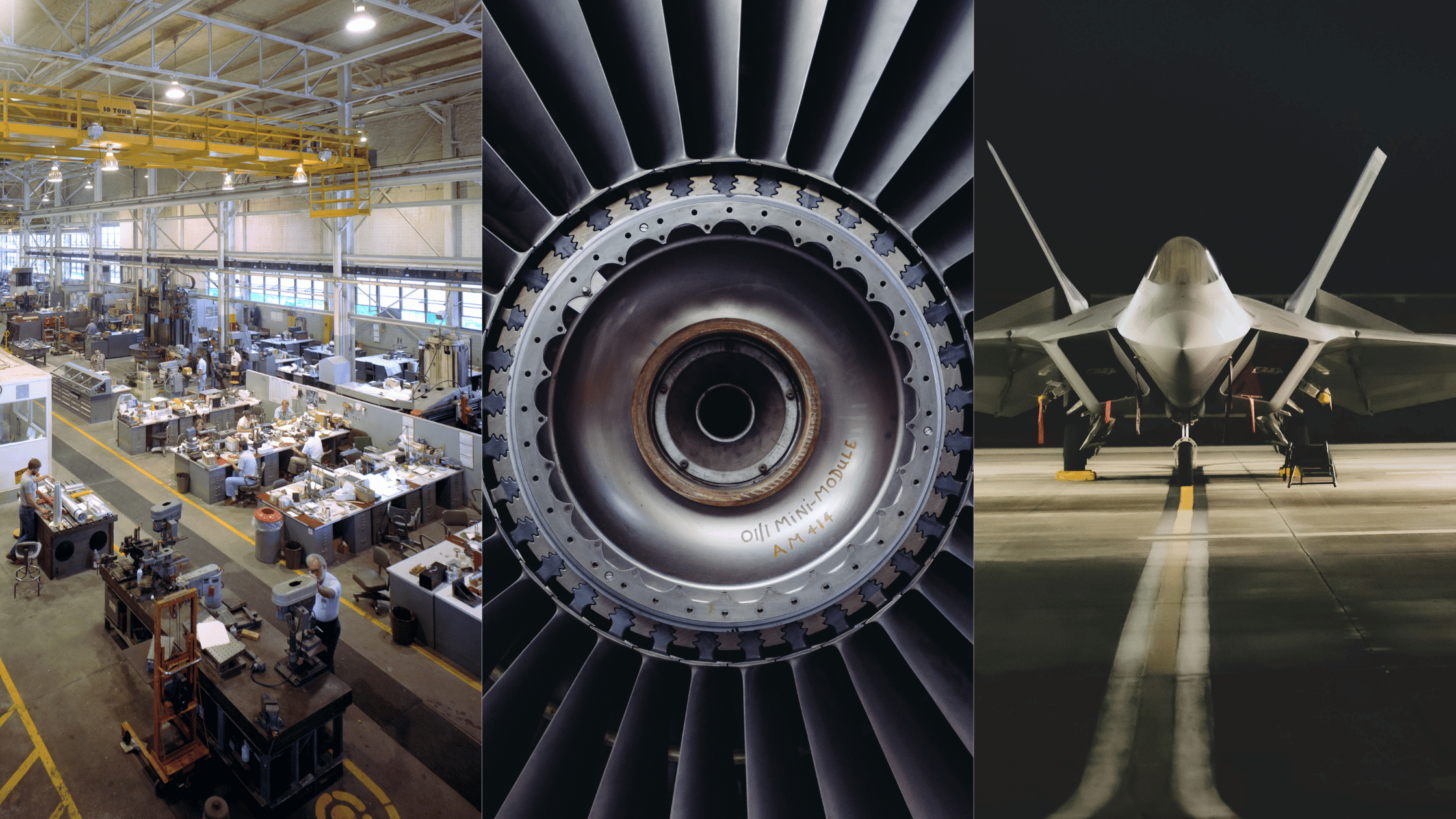
Aerospace and defense manufacturing depends on repeatable processes, accurate records, and reliable delivery across machining, fabrication, composites, heat treatment, assembly, and inspection. A delayed spindle, unstable cure cycle, or missed process deviation can affect an expensive workpiece, a constrained asset, and a program schedule at the same time.
Aerospace and defense manufacturing monitoring gives operations, quality, maintenance, and program teams current visibility into equipment activity and selected process conditions. It can track machine status, spindle time, cycle time, downtime, vibration, temperature, pressure, vacuum, humidity, and other measurements supported by the equipment and monitoring configuration.
The purpose is practical: identify lost production time earlier, protect high value work in process, improve the use of existing capacity, and preserve objective production history. This guide explains what to monitor, where monitoring creates value, and how to introduce it without confusing operational data with formal quality or cybersecurity compliance.
What is aerospace and defense manufacturing monitoring?
Aerospace and defense manufacturing monitoring is the continuous collection and organization of machine, process, environmental, and production data from the equipment used to make aviation, space, and defense components.
A monitoring system can show whether a machine is running, idle, stopped, or in setup; how long a cycle takes; when a process moves outside an established range; and where production time is being lost. Historical records help teams compare shifts, jobs, machines, and process windows without rebuilding the production story from handwritten logs or disconnected spreadsheets.
The exact data available depends on the machine, sensor configuration, controller access, and system integrations. A mixed equipment facility may use noninvasive sensors for older assets, available machine signals for newer equipment, and job context from connected business systems.
Production monitoring supports operational and quality decisions. It does not replace an approved inspection method, a validated special process, a quality management system, or the controls required for sensitive defense information.
Why monitoring is especially valuable in aerospace and defense production
High value materials and work in process
Titanium, nickel based superalloys, specialty steels, and qualified composite materials carry significant material and processing cost. By the time a component reaches a late machining, heat treatment, or inspection step, it may also contain many hours of labor and machine time.
Earlier visibility into equipment and process changes can reduce the amount of production exposed to a developing issue. The financial effect includes avoided scrap, rework, repeat processing, expedited material, and lost production time.
Long cycle times and constrained equipment
Large five axis machining centers, coordinate measuring machines, autoclaves, furnaces, and specialized inspection systems often become schedule constraints. A single interruption can affect multiple downstream operations and threaten an on time delivery commitment.
Monitoring helps teams distinguish productive time from setup, waiting, idle, alarm, and unplanned downtime. That distinction supports more accurate capacity planning and helps determine whether the operation needs another asset or better use of the capacity already installed.
Tight tolerances and process sensitivity
Aerospace components often require stable cutting, thermal, environmental, and special process conditions. Small changes in spindle behavior, cycle duration, furnace temperature, autoclave pressure, or clean area conditions can justify investigation before a larger quality loss develops.
Monitoring creates a timestamped production record that can help teams compare an event with the affected job, machine, shift, and process period. Quality personnel remain responsible for determining whether a condition affects product acceptance and what action the approved quality system requires.
Complex program and supplier requirements
A facility may work under customer specifications, quality clauses, export controls, cybersecurity requirements, and critical process accreditation criteria at the same time. Useful monitoring must fit within that controlled environment.
The system should collect the information needed for the defined operational purpose, restrict access appropriately, and avoid moving controlled technical data into a system that has not been approved to handle it.
What aerospace manufacturers should monitor
The most useful monitoring plan begins with a production or financial question rather than a long list of possible sensors. Common questions include:
- Which constrained asset is limiting delivery or program performance?
- How much scheduled time is spent producing, setting up, waiting, or stopped?
- Which equipment or process conditions changed before a deviation?
- Are cycle times stable across jobs, machines, and shifts?
- Where are machining, special process, inspection, or release queues forming?
- How much production capacity is available without adding equipment?
Machine activity and utilization
Machine status, run time, idle time, setup time, downtime, and utilization show how scheduled capacity is being used. These measurements are especially useful for high cost assets where an hour of recovered production has meaningful revenue value.
Utilization should be reviewed with context. A machine waiting for inspection, tooling, material, programming, or an upstream operation may appear idle even when the root cause sits elsewhere in the production system.
Cycle time and throughput
Actual cycle time can be compared with the planned, quoted, or established baseline. Repeated variance may point to tool wear, conservative overrides, program changes, material differences, handling delays, or other conditions that affect capacity and job margin.
Cycle and part count data also improve production forecasting. Teams can compare expected completion with actual progress while there is still time to adjust schedules or resources.
Equipment condition
Vibration, temperature, current, power, pressure, and other condition signals can reveal changes in spindles, bearings, pumps, motors, vacuum systems, and supporting utilities. Trending matters because a stable baseline for one machine may differ from another.
Condition monitoring helps maintenance teams prioritize inspections and planned work. It should be combined with machine history, criticality, manufacturer guidance, and qualified technical judgment.
Process conditions
Temperature, pressure, vacuum, humidity, flow, torque, load, and time may be relevant to machining, composites, heat treatment, coatings, bonding, welding, and environmental control. The appropriate measurements and acceptable limits come from the approved process, customer requirements, equipment capability, and quality plan.
A monitoring platform can collect and organize selected process values. The facility must determine whether the instruments, calibration, sampling rate, data integrity, and record controls are suitable for any formal quality or acceptance purpose.
Monitoring applications by aerospace manufacturing process
CNC machining and precision grinding
For three axis and five axis machining centers, lathes, turn mill systems, Swiss machines, electrical discharge machines, and grinders, useful data may include:
- Machine status, run time, idle time, setup time, and downtime
- Spindle or cutting time
- Cycle time, part count, and throughput
- Spindle load, motor current, or power
- Vibration and equipment temperature
- Alarms, interruptions, and operator entered downtime reasons
The SensFlo metalworking monitoring page provides more detail on CNC equipment, spindle utilization, tooling, coolant, downtime, and production performance.
Composite layup, curing, and bonding
Composite processes depend on controlled material handling and repeatable cure conditions. Depending on the approved process, monitoring may include autoclave or oven temperature, pressure, vacuum, cycle duration, humidity, equipment status, and utility performance.
Connected records can help teams identify interruptions, compare actual cycles with the established process window, and investigate deviations. Formal cure acceptance still depends on approved instruments, calibrated systems, controlled recipes, and the organization’s quality procedures.
Heat treatment and thermal processing
Furnace status, cycle duration, temperature, vacuum, pressure, gas flow, and supporting equipment condition can help operations and maintenance teams identify interruptions or developing equipment problems.
Nadcap is an industry managed accreditation program for aerospace critical processes, including heat treating, nondestructive testing, welding, chemical processing, additive manufacturing, and composites. A production monitoring system may support visibility and record collection, but it does not establish Nadcap conformity on its own.
Fabrication, welding, and joining
Fabrication monitoring can include machine activity, cycle counts, weld process values, equipment current, gas flow, fixture status, and downtime. These records can help production teams find recurring delays and help qualified personnel investigate process variation.
Product acceptance must continue to follow the applicable welding procedure, personnel qualification, inspection plan, customer specification, and quality system.
Additive manufacturing
Additive systems can produce large volumes of machine and environmental data. Build status, cycle duration, chamber conditions, gas flow, temperature, interruptions, and supporting equipment performance may help teams understand build consistency and asset availability.
Monitoring should be planned around the approved additive process and the sensitivity of build files, design data, and customer information.
Inspection and nondestructive testing support
Production monitoring can show inspection equipment availability, cycle duration, queue time, environmental conditions, and supporting utility status. It can help expose bottlenecks at coordinate measuring machines or nondestructive testing operations.
It does not replace the qualified inspection method, inspector interpretation, acceptance criteria, or controlled inspection record.
How monitoring supports AS9100 and aerospace quality systems
The International Aerospace Quality Group develops and supports the 9100 series used across aviation, space, and defense supply chains. A quality management system defines how the organization controls processes, risks, records, nonconforming output, suppliers, and continual improvement.
Production monitoring can support that system by providing objective data for:
- Equipment and infrastructure review
- Production and process monitoring
- Capacity analysis and delivery performance
- Investigation of nonconforming output
- Corrective action and effectiveness review
- Maintenance and calibration planning
- Management review and operational risk analysis
The organization determines which records are controlled quality records, how long they are retained, who can approve changes, and how data integrity is protected. Monitoring data should be introduced through the same change control and risk review used for other production systems.
Cybersecurity, CMMC, and ITAR considerations
Defense manufacturing monitoring must be designed around the sensitivity of the information involved. Machine status and anonymous utilization data may present a different risk from part numbers, work instructions, geometry, program names, technical drawings, or production records connected to a defense contract.
The Department of Defense Cybersecurity Maturity Model Certification program provides a methodology for assessing implementation of required cybersecurity practices. 32 CFR Part 170 addresses the protection of Federal Contract Information and Controlled Unclassified Information on contractor information systems.
NIST SP 800 171 Revision 3 provides security requirements for protecting Controlled Unclassified Information in nonfederal systems and organizations. Contract requirements and implementation timing should be reviewed with qualified cybersecurity and contracting personnel.
The International Traffic in Arms Regulations govern defense articles, defense services, and related technical data. Facilities should determine whether monitored data includes controlled technical information and where that information may be stored, accessed, or transmitted.
Before connecting production equipment, define:
- The data collected from each machine and system
- The classification and sensitivity of that data
- The approved network and system boundary
- User access, authentication, and activity logging
- Data storage, retention, backup, and recovery requirements
- Remote access and integration rules
- Ownership for monitoring, incident response, and change control
SensFlo should be evaluated within the facility’s approved cybersecurity architecture and contract requirements. Monitoring software alone does not make an organization CMMC compliant or satisfy ITAR obligations.
The financial value of aerospace production monitoring
The business case usually combines additional production opportunity with lower operating cost. The size of the opportunity depends on the constrained asset, available demand, machine rate, material value, recurring losses, and the team’s ability to act on the data.
Recover productive capacity
More cutting, curing, processing, or inspection time can protect program schedules and create room for additional work. This is most valuable when customer demand exists and the monitored equipment limits output.
The guide to improving machine utilization explains how to separate scheduled time, available time, run time, and productive time before assigning a financial value to recovered capacity.
Protect job margin
Actual cycle time, downtime, and equipment behavior provide a stronger basis for job costing and future quoting. When a recurring operation takes longer than planned, the team can investigate the cause and update routing, pricing, or improvement priorities with current data.
Reduce scrap and rework exposure
Earlier detection of equipment or process change can limit the amount of high value material and accumulated labor exposed to an issue. The financial effect may include material, machine time, inspection, engineering review, repeat processing, and delivery recovery costs.
Avoid premature capital spending
Utilization and downtime data help leaders determine whether a new machine is necessary. If the existing constraint contains significant setup, waiting, or unplanned downtime, recovering part of that time may defer capital expense while supporting near term output.
Calculate the opportunity with facility data
The SensFlo ROAI Calculator uses machine count, production time, machine rate, output, and pricing inputs to estimate the effect of added productive time. The result should be treated as a planning estimate and validated against actual demand, contribution margin, and operating constraints.
How FloControl supports aerospace and defense operations
FloControl machine monitoring software organizes equipment signals into production information such as run time, idle time, cycle time, throughput, downtime, utilization, and shift performance. SensFlo can support mixed equipment environments, including legacy and modern assets, with the exact data determined by the deployment configuration.
Teams can use current and historical information to answer questions such as:
- Which machine or process is currently limiting output?
- How much scheduled time is spent producing, setting up, waiting, or stopped?
- Which downtime causes create the greatest delivery or financial effect?
- Are cycle times stable across jobs, machines, and shifts?
- Which equipment conditions changed before a breakdown or quality event?
- How much capacity is available for current demand or additional work?
Facilities can compare capabilities on the SensFlo pricing page and select the level of visibility, operator workflow, analytics, and integration appropriate for the operation.
How to implement monitoring in an aerospace facility
1. Choose a measurable production constraint
Start with an asset or process that affects delivery, capacity, scrap, maintenance cost, or capital planning. A constrained five axis machine, autoclave, furnace, or inspection resource usually provides a clearer business case than a broad pilot with no defined priority.
2. Define the decisions the data must support
Agree on the questions operations, maintenance, quality, and program teams need to answer. Then select the smallest useful set of signals, metrics, alerts, and reports.
3. Classify the data before connecting equipment
Determine whether the planned data includes customer restricted information, export controlled technical data, FCI, or CUI. Confirm the approved system boundary, access rules, storage locations, and integration limits before deployment.
4. Separate operational monitoring from acceptance records
Document which values support production decisions and which values are used for formal product or process acceptance. If monitoring data will become a controlled quality record, involve quality, metrology, IT, and cybersecurity personnel in the validation and change process.
5. Establish a baseline
Measure normal machine status, cycle time, downtime, utilization, and selected condition data before setting targets. Baselines should account for different jobs, materials, tooling, programs, and operating modes.
6. Create an action workflow
Define who receives each alert, what they should verify, how the response is documented, and when quality or cybersecurity personnel must be involved. Data creates value when it leads to a timely and appropriate action.
7. Review financial and operational results
Compare the baseline with the measurement period after implementation. Track recovered productive time, avoided downtime, cycle stability, reporting labor, schedule performance, and verified cost savings. Expand to the next asset when the first deployment has a clear owner and measurable effect.
Build an aerospace monitoring plan around the work that matters most
Aerospace and defense manufacturers do not need more disconnected production data. They need accurate visibility into the machines and processes that determine delivery, quality, capacity, and margin.
A focused monitoring program begins with a constrained asset, a defined decision, and an approved data boundary. From there, the facility can use objective production history to recover capacity, reduce avoidable cost, and improve planning while preserving the controls required by its customers, quality system, and defense contracts.
Contact SensFlo to review your equipment, data requirements, production constraints, and expected financial effect.
Frequently Asked Questions
What is aerospace and defense manufacturing monitoring?
Aerospace and defense manufacturing monitoring continuously collects machine, process, environmental, and production data from equipment used to make aviation, space, and defense components. It can provide visibility into machine status, spindle time, cycle time, downtime, equipment condition, and selected process measurements. The SensFlo aerospace and defense page summarizes common applications across machining, fabrication, composites, and critical processes.
What equipment can be monitored in an aerospace manufacturing facility?
Monitoring can be applied to CNC mills, lathes, grinders, electrical discharge machines, autoclaves, ovens, heat treatment furnaces, additive manufacturing systems, welding equipment, inspection resources, pumps, compressors, and supporting utilities. The available data depends on the equipment, sensors, controller access, and deployment configuration.
What data should aerospace manufacturers monitor?
Common starting points include run and idle state, spindle utilization, cycle time, downtime, part count, vibration, temperature, current, power, pressure, vacuum, humidity, and flow. The best selection depends on the production constraint and the decisions the data must support. Read The Complete Guide to Machine Monitoring for Manufacturers for a broader overview.
Can machine monitoring support AS9100?
Machine monitoring can provide objective production and equipment data for process performance, operational risk, corrective action, maintenance, and on time delivery analysis. The organization remains responsible for its quality management system, record controls, inspection methods, acceptance decisions, and certification requirements. Monitoring software does not provide AS9100 certification by itself.
Does production monitoring satisfy Nadcap requirements?
Production monitoring may help collect selected equipment and process data for heat treatment, composites, welding, chemical processing, nondestructive testing support, and other critical processes. Nadcap conformity depends on the applicable audit criteria, approved procedures, qualified personnel, calibrated equipment, controlled records, and customer requirements. A monitoring platform does not establish Nadcap accreditation on its own.
Can SensFlo be used in a CMMC or ITAR controlled environment?
The answer depends on the system architecture, contract requirements, data classification, approved boundary, storage locations, access controls, and deployment configuration. A facility should identify whether planned monitoring data includes FCI, CUI, ITAR controlled technical data, or customer restricted information before connecting equipment. SensFlo must be evaluated within the organization’s approved cybersecurity and export control program.
How does monitoring reduce aerospace manufacturing downtime?
Monitoring detects stopped, idle, or abnormal equipment conditions while production is running and preserves the timing and duration of each event. Teams can respond sooner, identify recurring causes, and prioritize maintenance based on production impact. The machine downtime reduction guide explains the measurement and improvement process.
How is the financial return from aerospace machine monitoring calculated?
Return can include recovered productive hours, additional sellable output, avoided scrap and rework, reduced reporting labor, lower maintenance expense, and deferred capital spending. Use the SensFlo ROAI Calculator to estimate the opportunity, then validate the estimate with actual demand, contribution margin, machine rates, and operating constraints.



Talk to us
Let us take your company to the next level. Let’s have a chat and find out how we can help you.

