

Machine Monitoring for Medical Device Manufacturing: The Guide to Quality, Traceability, & Compliance
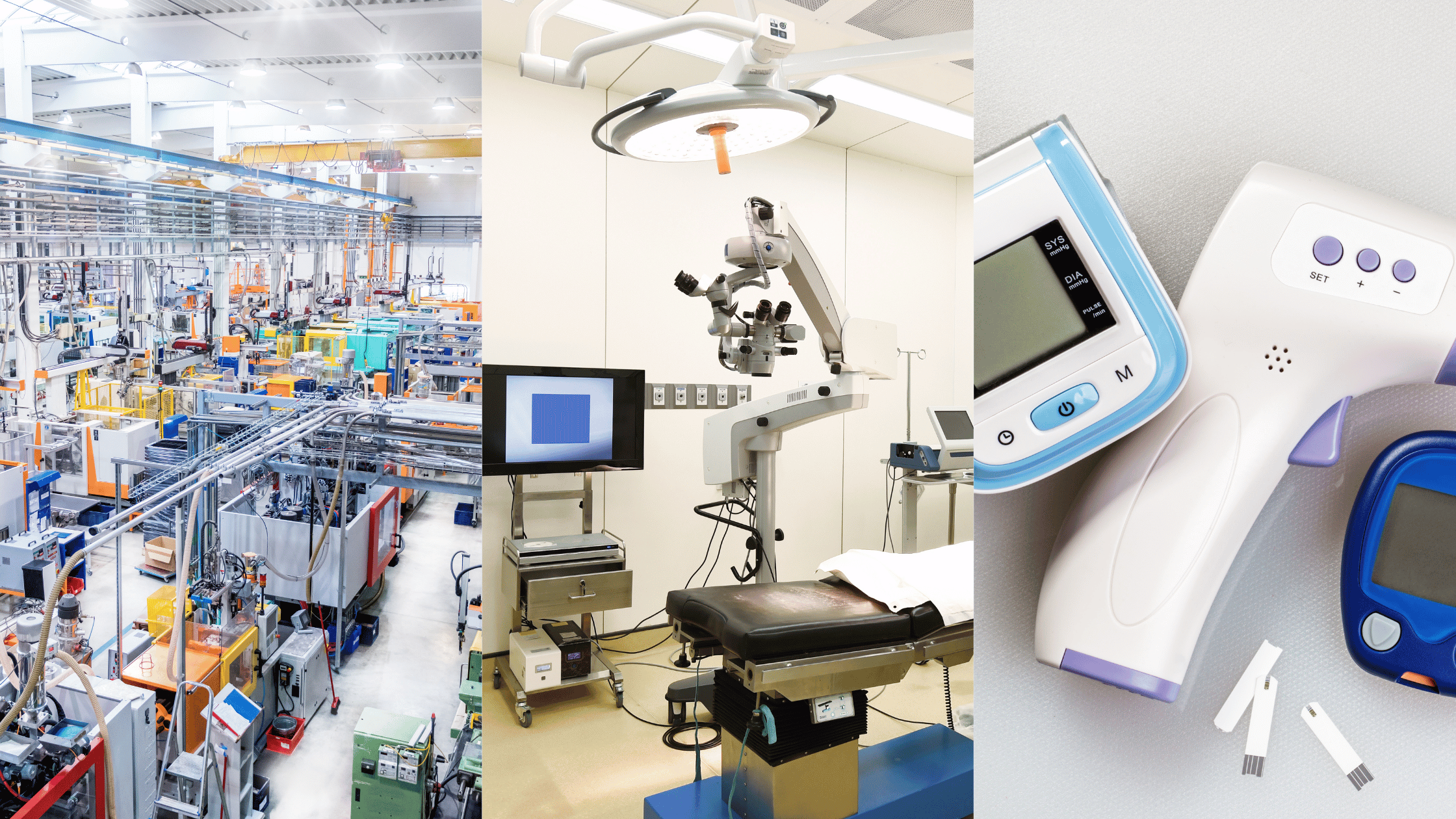
Medical device manufacturing depends on controlled processes, reliable equipment, accurate records, and consistent product quality. A change in molding, extrusion, machining, assembly, sterilization, packaging, testing, or environmental conditions may require investigation and can place high value production at risk.
Medical device manufacturing machine monitoring gives operations, maintenance, quality, and engineering teams current visibility into equipment activity and selected process conditions. It can show when a machine, cell, cleanroom system, sterilization resource, or test station is running, idle, stopped, or moving away from its established baseline.
This guide explains what medical device manufacturers should monitor, how production data can support the quality management system, where monitoring creates financial value, and how to implement it without confusing operational visibility with regulatory compliance or product acceptance.
What is medical device manufacturing machine monitoring?
Medical device manufacturing machine monitoring is the continuous collection and organization of equipment, process, environmental, and production data from the systems used to produce, assemble, sterilize, package, and test medical devices and components.
A monitoring system may collect machine state, cycle time, throughput, downtime, utilization, vibration, temperature, current, power, pressure, force, torque, humidity, differential pressure, and other available measurements. The exact data depends on the equipment, instruments, sensors, controller access, and deployment configuration.
Current data helps teams respond while production is active. Historical data helps them compare machines, lots, products, processes, shifts, and event windows. Together, those views provide a shared timeline for production review, maintenance, and investigation.
Machine monitoring can support quality system activities when it is introduced through approved procedures and controls. It does not establish device conformity, validate a process, release product, or create regulatory compliance by itself.
Why monitoring matters in medical device production
Patient impact raises the importance of process control
Medical devices and components may perform critical functions. Manufacturers need clear production and process information so qualified personnel can identify changes, investigate events, and take action under the quality system.
Small components can carry high accumulated value
By the time a device reaches final assembly, sterilization, packaging, or testing, it may contain significant material, labor, inspection, and processing cost. Earlier visibility can help limit the production period affected by a developing equipment or process issue.
Validated processes require controlled change
Some production results cannot be fully verified through later inspection or testing, making process validation and ongoing control especially important. Monitoring data can provide useful production context, but any use within a validated process must follow approved procedures, change control, instrument, data integrity, and quality requirements.
Environmental conditions may affect production
Cleanroom temperature, humidity, differential pressure, particle control, and supporting equipment performance may be relevant to the facility and process. Monitoring selected conditions can provide earlier visibility into excursions or system changes.
Equipment availability affects customer and patient supply
Unplanned downtime on a constrained molding press, extrusion line, automated assembly cell, sterilization resource, package sealing system, or test station can affect delivery and inventory. Equipment and downtime data helps teams focus maintenance on the assets with the greatest supply effect.
What medical device manufacturers should monitor
The monitoring plan should begin with a production, quality, or financial question. Common examples include:
- Which constrained asset is limiting approved production?
- How much scheduled time is spent producing, setting up, waiting, or stopped?
- Which equipment or environmental conditions changed before a deviation?
- Are cycle times stable across lots, machines, and shifts?
- Where are inspection, sterilization, packaging, or release queues forming?
- How much production capacity is available without adding equipment?
Machine state and utilization
Run, idle, stopped, setup, fault, cleaning, and maintenance states show how available time is used. Status should be reviewed with reason and production context because material, quality review, line clearance, inspection, staffing, or an upstream operation can appear as equipment idle time.
Cycle time and throughput
Actual cycle time can be compared with the approved or established operating baseline. Trends by product, lot, tool, machine, and shift can help teams identify drift, slow cycles, bottlenecks, and capacity loss.
Downtime and delay reasons
Capture the start, duration, asset, production context, and reason for each event. This helps distinguish equipment breakdown from setup, line clearance, material, inspection, quality review, sterilization, and release delays.
The SensFlo machine downtime guide explains how to measure, prioritize, and correct recurring production losses.
Equipment condition
Vibration, temperature, current, power, pressure, and other signals can show changes in motors, bearings, pumps, spindles, drives, compressors, vacuum systems, and supporting utilities. Trends help maintenance teams prioritize inspection and planned work.
Selected process and environmental measurements
Temperature, pressure, force, torque, speed, flow, humidity, differential pressure, vacuum, time, and other measurements may be relevant to a device or process.
The device master record, approved procedure, process validation, risk management, control plan, measurement system, and quality system determine which values are controlled and how acceptance is established.
Medical device equipment that can be monitored
Injection molding and plastics processing
Molding and extrusion equipment may be monitored for machine state, cycle time, drive behavior, temperature, pressure where available, cooling equipment, material handling, changeovers, and downtime.
The SensFlo plastics monitoring page provides additional detail on press utilization, cycle stability, molding equipment, auxiliaries, and production loss.
CNC machining and precision finishing
Machining centers, lathes, Swiss machines, grinders, electrical discharge machines, and finishing equipment may be monitored for machine state, spindle activity, cycle time, load, vibration, temperature, tooling events, coolant systems, and downtime.
Visit the SensFlo metalworking monitoring page for additional CNC and spindle monitoring applications.
Automated assembly and joining
Assembly systems may provide station state, cycle time, force, torque, displacement, temperature, pressure, completion, faults, and downtime data. The approved process determines which parameters are controlled and how the result is accepted.
Cleanrooms and controlled environments
Environmental monitoring may include temperature, humidity, differential pressure, and the operating condition of air handling, filtration, and supporting utility equipment. Particle and microbiological monitoring require appropriate methods, instruments, procedures, and quality controls.
Sterilization equipment
Sterilization processes may use time, temperature, pressure, humidity, concentration, dose, vacuum, equipment state, and cycle data depending on the method. Monitoring can support equipment visibility and production history.
Sterilization validation, routine control, release, instruments, records, and acceptance remain governed by the applicable process, standards, regulatory requirements, and approved quality procedures.
Packaging and sealing
Forming, filling, sealing, labeling, pouching, cartoning, and inspection equipment may be monitored for state, cycle time, temperature, pressure, force, rejects, changeovers, and downtime. Packaging validation and integrity requirements determine how process data is controlled and used.
Inspection and test equipment
Vision systems, leak testers, electrical testers, coordinate measuring machines, and functional test stations may be monitored for availability, cycle duration, queue time, faults, and throughput. Product acceptance depends on approved methods, validated software where applicable, calibrated equipment, and quality procedures.
Production utilities
Compressed air, vacuum, chilled water, clean steam, water systems, and environmental controls may support several processes. Monitoring can help identify interruptions or declining equipment performance that affects production availability.
How monitoring supports the FDA Quality Management System Regulation
The FDA’s Quality Management System Regulation became effective on February 2, 2026. The QMSR incorporates ISO 13485:2016 by reference and includes additional FDA requirements.
Production monitoring may provide objective information that supports quality system activities such as:
- Equipment and infrastructure review
- Production and process monitoring
- Maintenance planning
- Investigation of nonconforming product
- Corrective and preventive action analysis
- Process performance and risk review
- Production history and traceability support
The manufacturer remains responsible for the quality management system, regulatory applicability, process validation, risk controls, approved procedures, record controls, data integrity, product release, and all other QMSR obligations.
How monitoring supports ISO 13485 quality systems
ISO 13485 is designed for organizations involved in the design, production, installation, and servicing of medical devices and related services.
Monitoring data can support process performance, equipment maintenance, production review, investigation, corrective action, and continual evaluation when it is governed by the organization’s procedures. Certification and conformity depend on the complete quality management system and the applicable regulatory framework.
Data integrity and controlled records
Before monitoring data is used as a quality record or as evidence for a validated process, the organization should define the intended use and applicable controls. Considerations may include access, authentication, timestamps, auditability, retention, backup, review, approval, change control, software validation, instrument calibration, and record correction.
Operational machine data may have a different control requirement from data used for product acceptance or regulatory evidence. The distinction should be documented with quality, regulatory, engineering, IT, and cybersecurity personnel.
The financial value of medical device machine monitoring
The business case combines protected product supply with lower scrap, rework, downtime, labor, and capital costs. Estimates should use actual demand, contribution margin, machine rates, batch or lot value, downtime, scrap, investigation, maintenance, and reporting history.
Protect production capacity and supply
Reducing recurring stops, slow cycles, waiting, and changeover time can create more approved production opportunity from existing equipment and support reliable customer supply.
Limit scrap and batch exposure
Earlier visibility and a clearer production timeline can help qualified teams investigate sooner and define the affected period more accurately. Potential savings include material, labor, inspection, sterilization, packaging, investigation, and repeat production.
Reduce maintenance and recovery costs
Condition and downtime data helps maintenance teams focus on critical assets and plan work with production context. More predictable equipment performance can reduce overtime and schedule recovery.
Improve capacity and capital decisions
Utilization, cycle, setup, and delay data helps leaders determine whether additional equipment is required or whether capacity can be recovered from existing assets.
Estimate the opportunity
The SensFlo ROAI Calculator helps manufacturers estimate the revenue and cost effect of recovered productive time. Validate the estimate with actual demand, contribution margin, quality constraints, approved production capacity, and verified results.
How FloControl supports medical device manufacturing
FloControl machine monitoring software organizes equipment signals into production information such as run time, idle time, cycle time, throughput, downtime, utilization, and shift performance. Where a deployment includes suitable instruments and integrations, selected process and environmental measurements may be connected to production workflows.
Teams can use FloControl to answer questions such as:
- Which constrained assets are currently affecting approved production?
- How much time is spent producing, setting up, waiting, or stopped?
- Which cycles are moving away from their established baseline?
- Which downtime causes have the greatest supply effect?
- Which equipment condition changes require maintenance review?
- How closely is actual output following the production plan?
Facilities can review SensFlo pricing to compare monitoring, workflow, analytics, reporting, and integration capabilities.
How to implement monitoring in a medical device facility
1. Select the primary production constraint
Begin with the machine, process, environmental system, sterilization resource, packaging line, or test station with the greatest effect on supply, product risk, scrap, or operating cost.
2. Define the intended use of the data
Document the decisions the data will support and whether it is operational information, supporting evidence, a controlled quality record, or part of a validated process.
3. Complete quality and risk review
Involve quality, regulatory, engineering, validation, IT, cybersecurity, and metrology personnel as appropriate. Define required procedures, validation, instruments, access, retention, review, and change control.
4. Select the smallest useful set of signals
Choose machine, process, and environmental data that directly supports the intended decisions. Avoid collecting sensitive or regulated information without a defined purpose and approved control.
5. Establish a baseline
Measure normal run time, downtime, cycle time, throughput, setup, utilization, and selected condition data across relevant products, lots, tools, machines, and operating modes.
6. Create response workflows
Define who receives alerts, what they verify, when production or product must be contained, who makes quality decisions, and how the response is documented.
7. Verify results and expand
Compare baseline and post implementation performance. Track recovered time, output, downtime, scrap exposure, maintenance response, reporting labor, and verified savings. Expand after the first use case has an approved workflow, clear owner, and measurable result.
Build medical device monitoring around controlled decisions
Medical device machine monitoring is most useful when every data point has a defined purpose and every response fits within the quality system.
Start with a constrained process, define the intended use and controls, and measure the operational and financial effect. This gives operations, maintenance, quality, and engineering teams a shared production record while protecting product quality, supply, and margin.
Contact SensFlo to review your equipment, quality boundaries, data requirements, and expected return.
Frequently Asked Questions
What is medical device manufacturing machine monitoring?
It is the continuous collection and organization of equipment, process, environmental, and production data from systems used to produce, assemble, sterilize, package, and test medical devices and components.
What equipment can SensFlo monitor in a medical device facility?
SensFlo can monitor molding and extrusion equipment, CNC machines, automated assembly cells, environmental systems, sterilization resources, packaging and sealing equipment, inspection systems, test stations, pumps, compressors, and production utilities. Available data depends on the equipment and deployment configuration.
How does monitoring support the FDA QMSR?
Monitoring may provide objective information for equipment review, production and process monitoring, maintenance, investigation, corrective action, risk review, and production history. The manufacturer remains responsible for its quality management system, regulatory obligations, validation, procedures, records, data integrity, and product release.
How does machine monitoring support ISO 13485?
Monitoring data can support process performance, equipment maintenance, production review, investigation, and corrective action when governed by approved quality procedures. Certification and conformity depend on the complete quality management system and applicable regulatory requirements.
Can machine monitoring validate a medical device manufacturing process?
Monitoring can collect selected equipment and process data used within an approved validation strategy. Validation requires defined acceptance criteria, protocols, qualified equipment, suitable instruments, approved methods, documented results, change control, and quality approval. Monitoring software does not validate a process by itself.
Can SensFlo monitor cleanroom conditions?
Suitable deployments may connect selected environmental measurements and the operating condition of supporting systems. The exact capability depends on the instruments and configuration. Cleanroom classification, particle and microbiological monitoring, validation, calibration, alarm limits, and quality decisions remain governed by approved procedures and applicable requirements.
How does monitoring reduce medical device manufacturing downtime?
Monitoring records stopped, idle, slow, and abnormal equipment conditions while production is active. Teams can respond sooner, identify recurring causes, and prioritize maintenance based on production and supply effect. Read the SensFlo downtime reduction guide for the complete framework.
How is medical device machine monitoring ROI calculated?
Return may include recovered approved production time, protected supply, lower scrap and batch exposure, reduced maintenance expense, less reporting labor, and deferred capital spending. Use the SensFlo ROAI Calculator for an initial estimate and validate it with facility data.



Talk to us
Let us take your company to the next level. Let’s have a chat and find out how we can help you.

